
Is C3R Painful? What to Expect on the Day and During Recovery
If your eye doctor has just recommended C3R for keratoconus, one question probably came up before any other: Is C3R painful? You are not alone in asking. Pain and recovery are the two biggest worries we hear from patients before treatment, often more than the outcome itself.
Here is the honest answer. The procedure itself does not hurt, because your eye is fully numbed. The first two to three days afterwards can be uncomfortable, and for some people genuinely sore. After that, things improve quickly. Below we walk you through every stage, so nothing catches you off guard.
First, what is C3R?
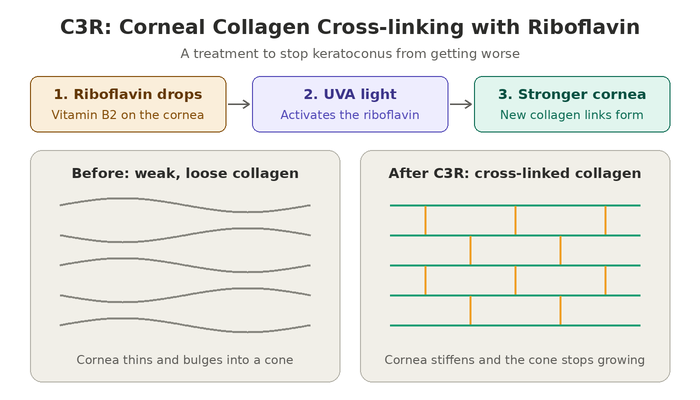
C3R stands for Corneal Collagen Cross-linking with Riboflavin. It is also called corneal collagen cross-linking, CXL or C3R eye treatment. In keratoconus, the cornea (the clear front window of the eye) slowly thins and bulges into a cone shape. That is what causes blur, glare and double vision.
C3R strengthens the cornea. Special riboflavin eye drops (vitamin B2) are applied, and the eye is then exposed to a controlled dose of UV light. Together they create new bonds between the collagen fibres, making the cornea stiffer. The main goal is to stop keratoconus progression so your vision does not keep getting worse. You can read more in our post on how C3R helps fight corneal changes.
Is C3R painful during the procedure?
No. Before anything begins, your doctor puts numbing eye drops (local anesthetic) into the eye. Most patients describe the procedure as strange rather than painful. You are awake, lying back, and simply looking up at a soft light.
What you may notice:
- A cool feeling from the drops and a little pressure from the small clip that keeps your eyelids open
- A brief scratchy sensation if the outer layer is removed, but no sharp pain
- Bright light, which some people find tiring to look at
- The need to keep still, which is often the hardest part
The whole c3r surgery usually takes 45 to 90 minutes, most of which is waiting for the riboflavin to soak in. You go home the same day. Bring a podcast or music; many patients say the time passes faster than expected.
Epi-off vs epi-on: why it matters for pain
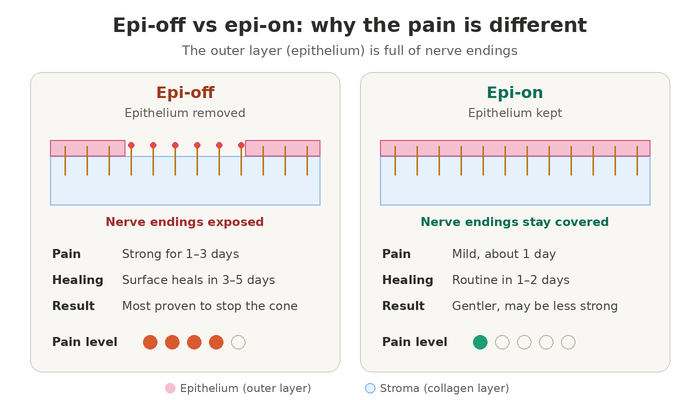
There are two main techniques, and they feel different afterwards.
Epi-off cross-linking | Epi-on cross-linking | |
What happens | The thin surface layer (corneal epithelium) is gently removed so riboflavin soaks in fully | The surface layer is left in place |
Discomfort afterwards | Moderate for 2 to 3 days while the surface grows back | Mild, usually a day or less |
Effectiveness | The long-established standard, strongest evidence | Gentler, but may be less effective in some eyes |
Most of the after-pain people talk about comes from epi-off cross-linking. The surface layer regrows within three to five days, much like a scraped knee healing over. Your doctor will choose the technique based on your corneal thickness, age and how fast your keratoconus is changing.
Is C3R surgery painful afterwards? A day-by-day guide
This is where honesty matters most. Is C3R surgery painful once the numbing wears off? For many epi-off patients, yes, for a short while. Here is what a typical C3R recovery time looks like:
When | What you may feel | What helps |
Evening of treatment | Numbing wears off; burning, watering, gritty feeling | Prescribed pain relief, rest in a dim room, sleep early |
Days 1 to 3 | The most uncomfortable stretch: light sensitivity, watering, a feeling of sand in the eye | Dark glasses, cold compress over closed lids, keep screens off |
Days 4 to 7 | Pain fades sharply as the surface heals | Most people return to desk work around now |
Weeks 2 to 4 | Little or no pain; vision still fluctuates | Continue drops exactly as prescribed |
Months 1 to 6 | Vision settles; haze clears | Regular follow-ups |
A quick word on fear: some patients put off treatment because of worry about pain. Keratoconus can take a real emotional toll, and it is normal to feel anxious. Our article on keratoconus and mental wellness may help. Two or three uncomfortable days are a small price for protecting your eyesight for years.
Precautions after C3R surgery
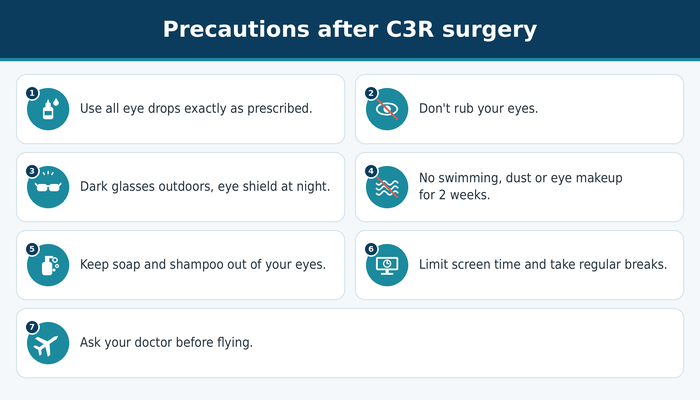
These simple precautions after C3R surgery keep you comfortable and help the eye heal well:
- Use every drop exactly as prescribed, including antibiotic and anti-inflammatory drops.
- Do not rub your eyes. Rubbing is also one of the habits that worsens keratoconus.
- Wear dark glasses outdoors, and a shield at night if given one.
- Avoid swimming, dusty places and eye makeup for about two weeks.
- Keep soap and shampoo water out of the eye.
- Limit screen time for the first few days, then take regular breaks.
- Check with your doctor before flying; see our guide to air travel after C3R surgery.
Does C3R improve vision?
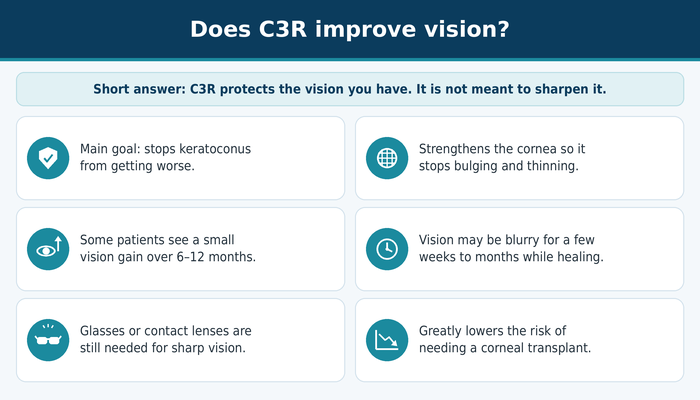
It is important to set the right expectations. Does C3R improve vision? C3R is mainly designed to stop keratoconus from getting worse, not to sharpen your sight. Some patients notice a slight flattening of the cornea and a modest improvement over the following year, but this is a bonus, not a promise. Glasses, specialty contact lenses or ICL may still be needed afterwards.
When it comes to C3R surgery success rate, published studies commonly report that progression is halted in over 90 percent of treated eyes. The strengthening is long-lasting, and repeat treatment is rarely needed. You will still need annual eye exams after cross-linking to confirm the cornea stays stable.
Getting C3R treatment in Mumbai
The more experienced your surgeon, the smoother the day and recovery tend to be. At Clear Vision Eye Centre in Santacruz, our cornea team led by Dr. Vinay Agrawal explains each step before C3R treatment in Mumbai, prescribes a clear pain plan for the first 72 hours, and stays reachable during recovery. If you have questions about whether C3R is right for you, book a consultation.
Frequently asked questions (FAQs)
1. Is C3R painful for everyone?
No. The procedure is painless for almost everyone thanks to numbing eye drops. After epi-off cross-linking, most people feel moderate discomfort for two to three days. After epi-on cross-linking, discomfort is usually mild.
2. What is the C3R recovery time?
Pain usually settles within three to five days. Most people return to desk work within a week. Vision can take one to three months to stabilize, and occasionally up to six.
3. How long does blurred vision after C3R surgery last?
Blur is expected for the first few weeks while the surface heals and any corneal haze clears. It often fluctuates day to day. If vision suddenly drops, contact your doctor.
4. Is C3R permanent?
The strengthening effect is long-lasting, and most eyes stay stable for many years. A small number of patients need repeat treatment, which is why yearly check-ups matter.
5. Can I watch TV or use my phone after C3R?
Keep screen use to a minimum for the first two to three days, when light sensitivity is strongest. After that, short sessions with regular breaks are fine.
6. When can I go back to work or college?
Most patients return to desk work or classes in five to seven days. Jobs with dust or heavy physical work may need a little longer.
7. Is C3R suitable for children with keratoconus?
Yes. Keratoconus often progresses faster in young people, so early C3R for keratoconus is frequently recommended for teenagers. Your doctor will check corneal thickness first.
8. What is the full form of C3R?
C3R stands for Corneal Collagen Cross-linking with Riboflavin, a C3R eye treatment that uses riboflavin eye drops and UV light to strengthen a weak cornea.