Can You Travel by Air After Keratoconus Treatment or C3R Surgery?
Keratoconus is a progressive eye condition where the normally round cornea thins out and begins to bulge into a cone-like shape. This distortion significantly impacts visual clarity, making standard tasks challenging. Fortunately, medical advancements offer reliable solutions to halt this progression. Among the primary management protocols is Corneal Collagen Cross-Linking (CXL or C3R), which strengthens the corneal tissue layers. After undergoing such a life-altering intervention, patients often have practical concerns regarding daily activities, especially regarding geographic mobility and flying. Understanding the healing timeline is crucial for ensuring optimal recovery and safeguarding surgical outcomes.
When seeking specialized care, opting for advanced facilities ensures access to state-of-the-art diagnostic algorithms and cross-linking technologies. For individuals looking to address this condition, finding a premier center for Keratoconus Treatment in Mumbai provides the clinical baseline required for stabilizing vision effectively. However, post-operative compliance remains entirely the patient’s responsibility. Air travel introduces unique environmental variables, such as highly pressurized, dry cabin air and cosmic radiation exposure, which can severely aggravate a recovering ocular surface. Therefore, patients must strictly adhere to the professional timeline provided by their medical team before booking a flight.
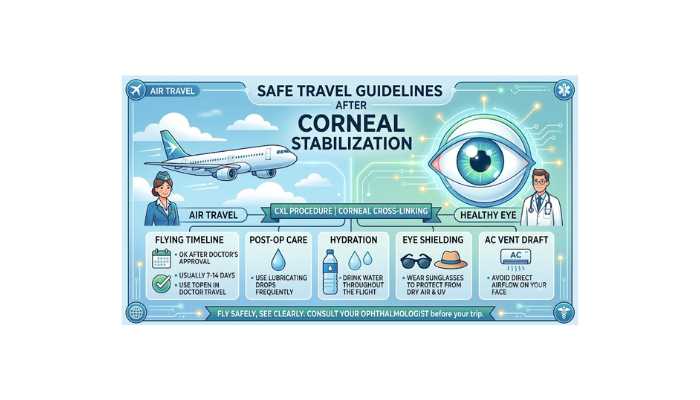
The core question for most individuals post-procedure is how cabin pressure affects the healing eye. During C3R Surgery in Mumbai, the outermost protective layer of the cornea (the epithelium) is gently prepared to allow riboflavin eye drops to saturate the deep tissue, followed by controlled ultraviolet light exposure. Because this epithelial barrier needs time to close completely, the eye is exceptionally vulnerable to infection and dehydration during the immediate post-operative week. A highly pressurized aircraft environment strips moisture away at an accelerated rate, which can delay epithelial regeneration and cause acute discomfort.
Medical experts generally recommend waiting a minimum of 7 to 10 days before flying. This window allows the protective bandage contact lens placed over the cornea to be safely reviewed and removed by your physician. Below is a structured breakdown of the safety profile associated with varying timelines post-procedure:
Air Travel Post-Op Safety Matrix
Time Elapsed Post-Surgery | Risk Level | Air Travel Recommendation | Primary Clinical Concern |
0 to 3 Days | Critical / Very High | Strictly Prohibited | Severe pain, acute dryness, high infection risk, displaced bandage lens. |
4 to 7 Days | Moderate to High | Not Recommended | Incomplete epithelial healing, severe cabin-air induced dryness. |
7 to 14 Days | Low | Permissible with Precautions | Epithelium closed; requires frequent lubrication due to dry cabin environment. |
Beyond 14 Days | Minimal | Safe to Travel | Standard post-op maintenance; regular drop usage still advised. |
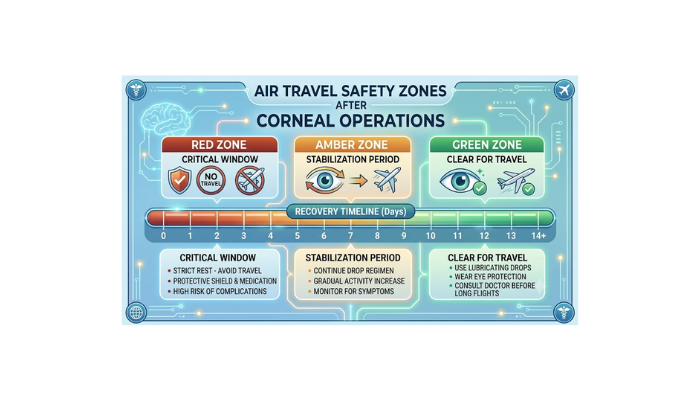
If you must board a flight after the initial healing window, implement these non-negotiable health pointers to protect your sight:
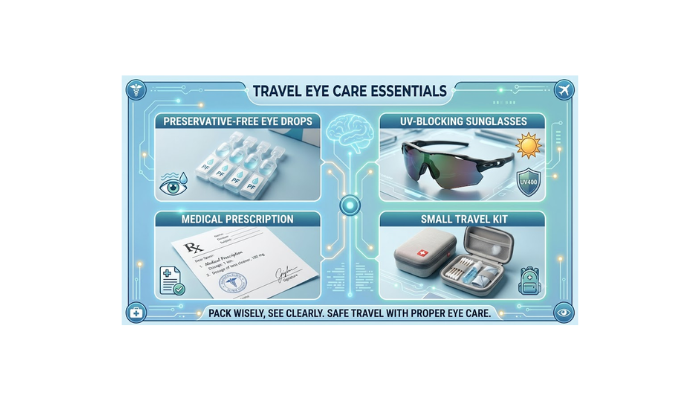
1. Aggressive Lubrication Strategy: Airplane cabins possess humidity levels often lower than 20%, which is comparable to a desert climate. Carry preservative-free artificial tears in your hand luggage and apply them every 30 to 60 minutes, even if your eyes do not actively feel dry.
2. Shielding from Direct Airflow: Avoid placing yourself directly beneath the overhead air conditioning vents. The constant blast of forced air accelerates tear evaporation, leading to micro-abrasions on the delicate corneal surface.
3. UV Radiation Defense: Atmospheric UV exposure increases significantly at high altitudes. Wear high-quality, wrap-around sunglasses with 100% UV protection throughout the daytime flight duration, even while inside the aircraft cabin.
4. Carry-On Medication Management: Never place your medicated antibiotic or anti-inflammatory eye drops in checked baggage. Luggage compartments face extreme temperature fluctuations that can destabilize chemical formulations, rendering them ineffective.
5. Emergency Preparedness Plan: Keep a hard copy of your surgical summary and prescriptions with you. Identify a local corneal specialist at your travel destination beforehand so you know exactly where to go if an unforeseen complication arises.
Managing structural corneal anomalies requires immense precision, long-term monitoring, and an in-depth understanding of biomechanical tissue properties. Entrusting your vision to a seasoned Keratoconus Specialist in Mumbai ensures that your structural diagnosis is accurate and that your custom treatment design maximizes long-term visual conservation. Because every eye features a completely unique topographical curvature, standardized approaches are insufficient; customized UV irradiation profiles must be calculated for every individual case.
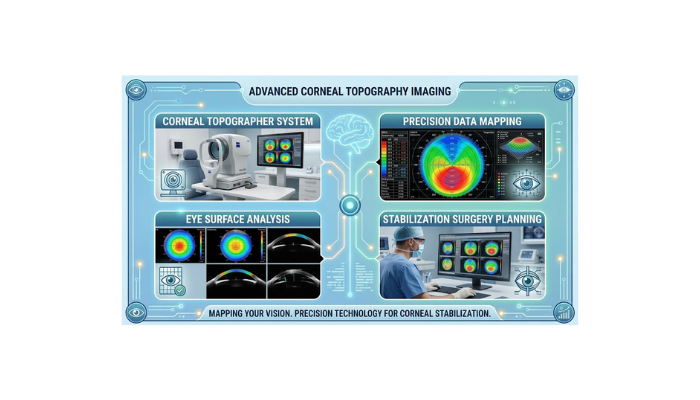
A highly accomplished Keratoconus Surgeon in Mumbai utilizes sophisticated anterior segment imaging, such as corneal topography and tomography, to track microscopic shifts over time. This exhaustive diagnostic tracking determines the ideal surgical window, preventing permanent visual loss. Choosing an experienced professional guarantees that you receive precise guidance on lifestyle adjustments, physical activities, and travel constraints uniquely calibrated to your specific rate of epithelial healing.
When studying the pioneering figures in modern Indian ophthalmology, Dr. Vinay Agrawal stands out as a true visionary for individuals navigating the challenges of progressive corneal thinning. Graduating from the prestigious T.N. Medical College in Bombay, his deep-seated dedication to understanding and resolving complex optical disorders led him to complete an advanced Master’s degree in Ophthalmology. Recognizing his clinical acumen and contributions to the field, the National Board of Examinations under the Ministry of Health proudly bestowed upon him the prestigious title of Diplomate of National Board (D.N.B.) in the year 1991. He completed his Cornea Fellowship from the renowned L.V.Prasad eye institute, under the world renowned Dr. G. N. Rao. Through his extensive clinical journey, he has successfully restored hope and clarity to thousands of patients.
Operating from the renowned Clear Vision Eye Centre, he has established a premier infrastructure equipped with advanced therapeutic systems dedicated to anterior segment healthcare. The institution combines compassionate patient interaction with cutting-edge academic methodologies, ensuring that complex procedures like corneal cross-linking achieve exceptionally high success rates. From initial screening to complex intra-operative execution and strict post-operative air travel counseling, the medical team ensures that patients remain fully supported across every single milestone of their recovery journey.
The specific variant of cross-linking performed also directly influences your recovery comfort and subsequent travel scheduling. The following structural table highlights the distinct operational features between traditional and modern accelerated methods:
Protocol Comparison & Travel Clearances
Operational Feature | Standard Dresden Protocol | Accelerated C3R Protocol |
UV Light Exposure Duration | 30 Minutes (Continuous) | 3 to 10 Minutes (Intense/Pulsed) |
Epithelial Layer Management | Epithelium Removed (Epi-Off) | Epithelium Intact or Partially Modified |
Initial Healing / Discomfort Period | 3 to 5 Days | 1 to 2 Days |
Safe Air Travel Window | 7 to 10 Days Post-Op | 5 to 7 Days Post-Op |
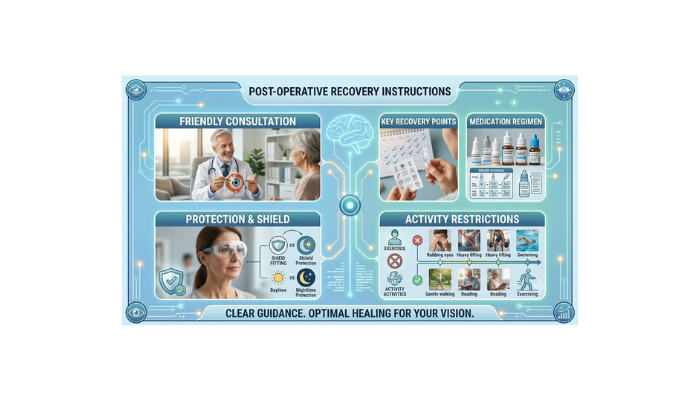
Ultimately, safeguarding your vision requires avoiding shortcuts during the critical post-operative phase. Planning an immediate vacation or business trip involving commercial flights right after your procedure exposes your healing eyes to preventable structural risks. By consulting a dedicated professional for comprehensive Keratoconus Surgery in Mumbai, you will receive clear, explicit timelines regarding when it is clinically safe to take to the skies based on how fast your corneal tissue is regenerating.
Prioritize Your Vision Safety with Clear Vision Eye Centre
Do not leave your post-operative recovery to chance or guesswork. Ensure your eyes receive the finest clinical care and precise structural guidance before embarking on any travel plans. Reach out to our expert team for definitive Keratoconus Treatment in Mumbai today to plan a safe, seamless path toward clear, stable vision.
Frequently Asked Questions (FAQs)
Q1: Why is the cabin air inside an airplane dangerous for my eyes after C3R surgery?
A: Aircraft cabins circulate highly filtered, low-humidity air that causes extreme dryness. Since your cornea is actively healing from the cross-linking procedure, this severe lack of moisture can stall epithelial recovery, cause pain, and increase the risk of surface scarring.
Q2: Can I fly if I wear my specialized wrap-around sunglasses inside the plane?
A: While wrap-around sunglasses effectively block harsh ambient light and protect against direct AC drafts, they do not alter cabin pressure or low humidity. You must still wait for the recommended 7-10 days before flying, even if you wear protective eyewear inside the cabin.
Q3: What should I do if my bandage contact lens falls out during a flight?
A: If the lens falls out, do not attempt to reinsert it yourself under any circumstances, as cabin environments harbor bacteria. Apply a generous dose of preservative-free lubricating drops, keep your eye closed using a clean eye patch or shield, and seek immediate medical attention upon landing.
Q4: Are there any specific restrictions on long-haul international flights compared to short domestic ones?
A: Yes. Long-haul flights expose your eyes to prolonged desert-like humidity conditions, multiplying the risk of severe dehydration. It is highly recommended to extend your waiting period to at least 14 days before embarking on international journeys spanning over 6 hours.