

The human eye is a marvel of precision engineering, and at its very front sits the cornea, the clear, dome-shaped window that focuses most of the light entering the eye. In a healthy eye, this cornea maintains a sturdy, rounded shape, allowing light to pass through clearly. However, for those living with Keratoconus, this vital structure begins to thin and gradually bulge outward into a cone-like shape. This progressive deformation disrupts the eye’s ability to focus, leading to distorted vision, glare, and a significant impact on daily life. If you have noticed that your vision is becoming increasingly blurred or that your spectacle prescription is changing every few months, you may be experiencing the early signs of this condition. Navigating the path to recovery requires a specialized approach that focuses on stabilizing the corneal structure and restoring visual clarity. For patients seeking the highest standard of care, finding a reliable facility for Keratoconus Treatment in Mumbai is the first step toward safeguarding their long-term ocular health and reclaiming their quality of life.
The Hidden Nature of Keratoconus: What is Happening?
Keratoconus is more than just “bad eyesight.” It is a structural failure within the corneal tissue. The cornea is composed of tiny fibers of the protein collagen. These fibers are held together by “cross-links” that act like the structural beams of a building. In a patient with Keratoconus, these links are either too weak or insufficient in number.
As the internal pressure of the eye pushes against this weakened tissue, the cornea begins to sag and bulge. Imagine a soccer ball with a weak spot on its surface; as you pump air into it, that weak spot begins to protrude into a point. This “cone” shape causes light to scatter as it enters the eye, resulting in a type of irregular astigmatism that standard glasses simply cannot correct.
Causes and Risk Factors: Why Does it Develop?
While the exact cause of Keratoconus remains a subject of ongoing research, several factors are known to play a significant role:
1. Genetics and Family History
Statistics suggest that about one in ten people with Keratoconus has a parent or close relative who also has the condition. While it doesn’t always skip generations, having a family history means you should undergo regular screenings.
2. Chronic Eye Rubbing
This is perhaps the most significant environmental factor. Vigorous or chronic eye rubbing can damage the delicate corneal fibers and accelerate thinning. This is often seen in individuals with chronic allergies (such as hay fever or eczema) who rub their eyes to relieve symptoms.
3. Oxidative Stress
Research indicates that the corneas of patients with Keratoconus lack certain protective antioxidants. This allows “free radicals” to damage collagen fibers, weakening the eye’s overall structural integrity.
A Visionary in Ophthalmic Care: Dr. Vinay Agrawal
When treating progressive corneal diseases, the surgeon’s expertise is the most critical factor. Dr. Vinay Agrawal is not merely an ophthalmologist; he represents a breakthrough, a “eureka” moment, for those struggling with the complexities of Keratoconus. His journey began with a rigorous medical education at the prestigious T.N. Medical College in Bombay. Driven by a profound passion for understanding and treating intricate optical system disorders, he pursued a Master’s in Ophthalmology to refine his surgical skills. His dedication to excellence was further recognized in 1991, when the National Board of Examinations, Ministry of Health, awarded him the prestigious title of Diplomate of the National Board (D.N.B.).
At Clear Vision Eye Centre, this academic foundation is paired with over three decades of clinical mastery. We believe that every eye tells a unique story, and our diagnostic approach is designed to catch Keratoconus in its earliest, most manageable stages. Under the leadership of Dr. Vinay Agrawal, our team ensures that each patient receives a customized recovery roadmap that combines advanced technology with a deeply human touch.
Modern Diagnostic Tools: Finding the “Cone”
In the past, Keratoconus was often misdiagnosed as simple astigmatism until it reached an advanced stage. Today, we utilize high-resolution corneal topography and tomography. These devices create a three-dimensional “map” of the eye, measuring the thickness and curvature at thousands of different points.
If you are looking for a specialized Keratoconus Treatment Center in Santacruz, Mumbai, you will find that our facility utilizes these advanced mapping systems to detect microscopic thinning long before it affects your vision. Early detection is vital because it allows us to intervene while the cornea is still relatively thick and healthy.
The Spectrum of Treatment: Stabilizing and Restoring
Treating Keratoconus is a two-step process: first, we must stop the progression (stabilize), and second, we must improve the vision (restore).
1. Corneal Collagen Cross-Linking (C3R)
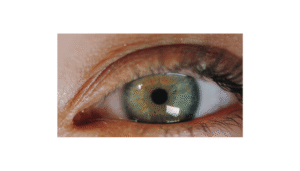
This is the gold standard for stabilization. By applying Riboflavin (Vitamin B2) drops and a specific wavelength of UV light, we create new “cross-links” between the collagen fibers. This effectively “freezes” the cornea in its current state, preventing further bulging. As leading Keratoconus Specialists in Mumbai, we recommend this procedure for almost all progressive cases to avoid the need for a future transplant.
2. Specialty Contact Lenses

Once the eye is stable, we focus on vision. Since the cornea is irregular, standard soft lenses won’t work. We utilize:
- Scleral Lenses: These large-diameter lenses vault over the cornea and rest on the white part of the eye (the sclera), creating a perfectly smooth liquid surface for light to enter.
- Rose-K Lenses: Specialized rigid lenses designed specifically for the cone shape.
3. Intacs (Corneal Inserts)
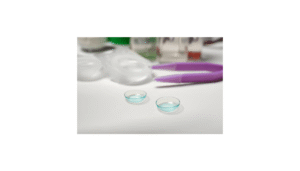
In some cases, a Keratoconus Surgeon in Mumbai may insert tiny, clear plastic arcs into the middle of the cornea. These arcs flatten the cone, making the surface more regular and easier to fit with contact lenses.
Prevention: Can it Be Stopped?
While you cannot change your genetics, you can influence the progression of the disease. The single most important preventative measure is to stop rubbing your eyes. If you suffer from allergies, consult an Eye Specialist in Santacruz, Mumbai, to get effective anti-allergy drops that stop the itch at its source. Protecting your eyes from UV rays with high-quality sunglasses also helps reduce the oxidative stress on the corneal tissue.
Take Control of Your Visual Future
Keratoconus is a journey, but it is not one you have to walk alone. The “fog” of distorted vision can be lifted through a combination of early intervention, surgical precision, and advanced optical solutions. At Clear Vision Eye Centre, we have dedicated our practice to ensuring that this condition does not define your boundaries. By combining thirty years of expertise with a commitment to the latest global protocols, we provide a haven for those who refuse to let their vision fade.
Don’t wait for the next change in your glasses prescription to take action. Secure your sight and invest in the stability of your eyes today. Your path to clarity begins with a comprehensive evaluation and the most advanced Keratoconus Treatment in Mumbai.
Schedule Your Consultation Today
Is your vision shifting? Don’t settle for “blurry” as your new normal. Trust your eyes to the experts who have been leading the way in corneal care for decades.
- Expert Diagnosis: Advanced 3D corneal mapping.
- Stabilization: State-of-the-art C3R/CXL procedures.
- Vision Restoration: Precision fitting for Scleral and specialty lenses.
- Contact us at +91-8356817556 to book your appointment.
Frequently Asked Questions (FAQs)
1. Is Keratoconus surgery painful?
The most common procedure, Cross-Linking (C3R), is performed under local anesthetic drops. While there may be some “grittiness” or discomfort for 2-3 days after the procedure as the surface heals, the surgery itself is painless.
2. Can Keratoconus lead to blindness?
Keratoconus rarely leads to total blindness. However, if untreated, it can cause severe visual impairment that prevents driving, reading, or working. With modern treatments, almost all patients can maintain functional, clear vision.
3. At what age does Keratoconus stop progressing?
The condition usually stabilizes on its own by the mid-30s or 40s. However, because it is most aggressive during the teenage years and 20s, early treatment is crucial.
4. Will I still need glasses after treatment?
The goal of Cross-Linking is stability, not the removal of glasses. However, once stable, most patients achieve excellent vision using specialized contact lenses or INTACS.