

The human eye is often compared to a sophisticated camera, but its most critical component is not the sensor at the back; it is the clear, protective window at the very front. This window, known as the cornea, refracts light, ensuring the images we see are sharp, vibrant, and clear. When this delicate tissue becomes scarred, clouded, or misshapen due to disease or injury, the impact on one’s quality of life can be devastating.
For many patients, especially those battling advanced stages of Keratoconus or corneal dystrophies, the world begins to lose its definition, fading into a blur that glasses or contact lenses can no longer resolve. In such instances, the gift of sight often depends on remarkable medical advances in tissue replacement. Navigating the complexities of ocular surgery requires not just advanced technology, but a deep sense of trust in the hands that perform the procedure. For residents in the western suburbs seeking a life-changing restoration of their vision, the journey toward clarity begins with a consultation with a seasoned Cornea Specialist in Santacruz, ensuring that every step of this delicate process is handled with the highest degree of surgical mastery and clinical empathy.
The Vital Role of the Cornea in Your Vision

To understand the necessity of surgery, one must first appreciate the cornea’s intricate structure. It is composed of five distinct layers, each serving a specific purpose in maintaining transparency and structural integrity. Conditions such as Fuch’s dystrophy, severe corneal infections, or advanced thinning from Keratoconus can lead to irreversible damage. When conservative treatments like specialized contact lenses or collagen cross-linking are no longer viable, Cornea Transplant Surgery becomes the definitive path to recovery.
A Legacy of Excellence: The Expertise of Dr. Vinay Agrawal
The success of a transplant is inextricably linked to the surgeon’s expertise and seasoned judgment. Dr. Vinay Agrawal is far more than a traditional ophthalmologist; he represents a “eureka” moment for those battling the complexities of vision loss. His journey in medicine began with a rigorous education at the prestigious T.N. Medical College in Bombay. Driven by an enduring passion for deciphering and treating complex disorders of the optical system, he pursued a Master’s in Ophthalmology to refine his surgical craft. His dedication to clinical excellence was further recognized in 1991 when the National Board of Examinations, Ministry of Health, conferred upon him the prestigious title of Diplomate of National Board (D.N.B.).
At Clear Vision Eye Centre, this academic brilliance is paired with over three decades of clinical experience. We recognize that the decision to undergo surgery is a significant emotional and physical milestone. Under the leadership of Dr. Vinay Agrawal, our team provides a supportive environment where patients are not just numbers, but individuals whose sight and lifestyle are our highest priority. By combining thirty years of mastery with the latest surgical techniques, we ensure that every patient at Clear Vision Eye Centre receives world-class care.
Understanding Transplant Types & Recovery Time
Deep Anterior Lamellar Keratoplasty (DALK)
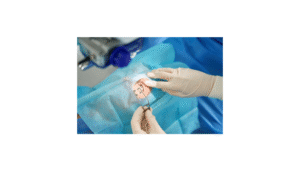
Deep Anterior Lamellar Keratoplasty, or DALK, is a specialized “partial-thickness” cornea transplant procedure. Unlike a traditional corneal transplant, which replaces the entire cornea, DALK involves replacing only the outermost and middle layers (the epithelium and stroma), while leaving the innermost layer (the endothelium) intact.
This technique is a significant medical advancement because it preserves the most critical part of your eye. This layer keeps the cornea clear.
Descemet Membrane Endothelial Keratoplasty (DMEK)
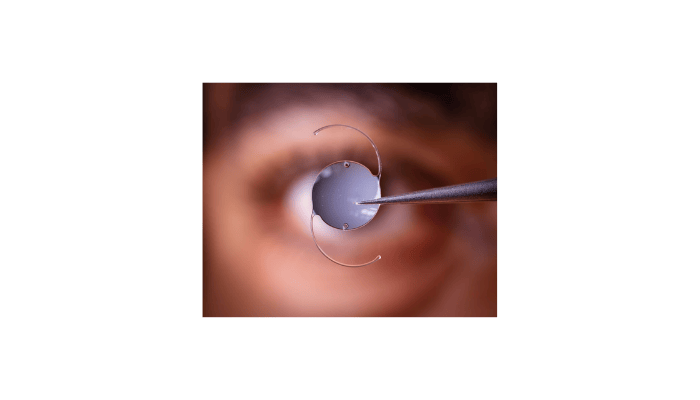
DMEK represents the absolute pinnacle of modern corneal transplant surgery. It is a “partial-thickness” procedure that is incredibly refined, replacing only the innermost layer of the cornea. This endothelium is roughly the thickness of a piece of cellophane (about 10-15 microns).
Unlike older transplant methods that replace the entire cornea or a significant portion of its thickness, DMEK is highly targeted. It is primarily used to treat “endothelial pump failure,” in which the inner cells of the cornea stop functioning, leading to fluid buildup and clouding of the eye.
Modern ophthalmology allows a Cornea Specialist in Santacruz, Mumbai, to perform targeted surgery, such as DALK or DMEK, replacing only the damaged layers.
Regarding the time for Cornea Transplant Surgery, the procedure typically takes 45 to 90 minutes. However, because the cornea heals slowly, full visual stabilization may take several months.
Patients often inquire about the Cost of Corneal Transplant Surgery, which varies depending on the specific technique and donor tissue required; we provide transparent pricing during our comprehensive evaluations.
Reclaim Your Vision Today
Living with corneal disease can feel like being trapped behind a frosted pane of glass, but you don’t have to navigate the blur alone.
- Masterful Surgery: Benefit from over 30 years of experience.
- Advanced Technology: Access the latest partial-thickness transplant techniques.
- Call Us: +91-8356817556 to book your evaluation with a premier Cornea Specialist in Santacruz.
Frequently Asked Questions (FAQs)
1. Where does the donor tissue come from?
Corneal tissue comes from individuals who have generously chosen to donate their eyes. Certified eye banks rigorously screen this tissue for safety and clarity.
2. What is the success rate of cornea transplants?
Success rates are generally high, especially for conditions like Keratoconus, where the risk of rejection is lower compared to other types of organ transplants.
3. Will I be able to see perfectly immediately after surgery?
No. Vision is usually blurry initially. As the eye heals and sutures are adjusted, vision improves over several months.
4. Can I rub my eyes after a transplant?
Absolutely not. Rubbing can damage donor tissue or disrupt sutures. We provide a protective shield for use during sleep.